A marketplace that doesn't look like one.
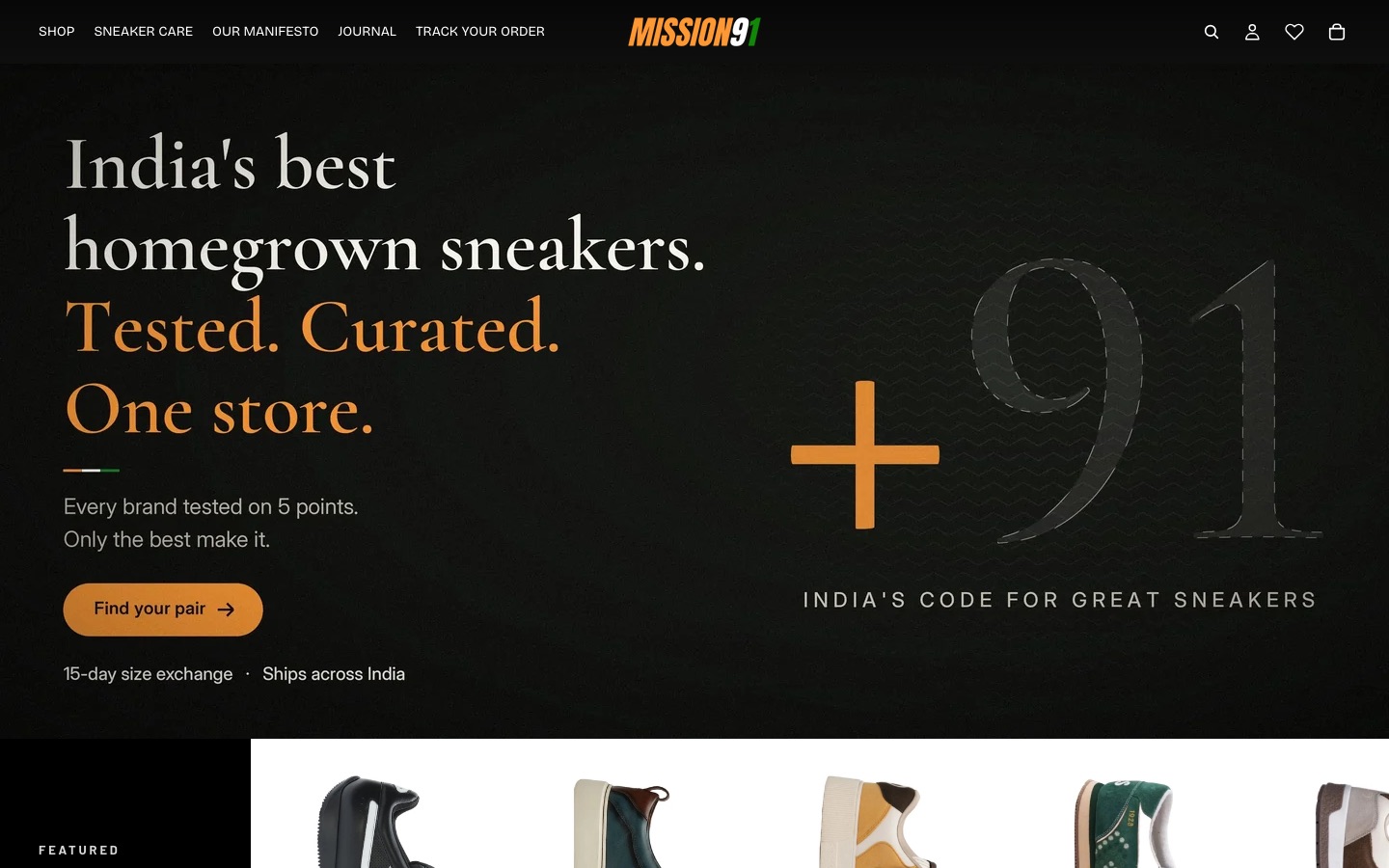
Mission 91 sells India's homegrown footwear brands from one store. It took 100+ orders through its launch period without a glitch.
The problem.
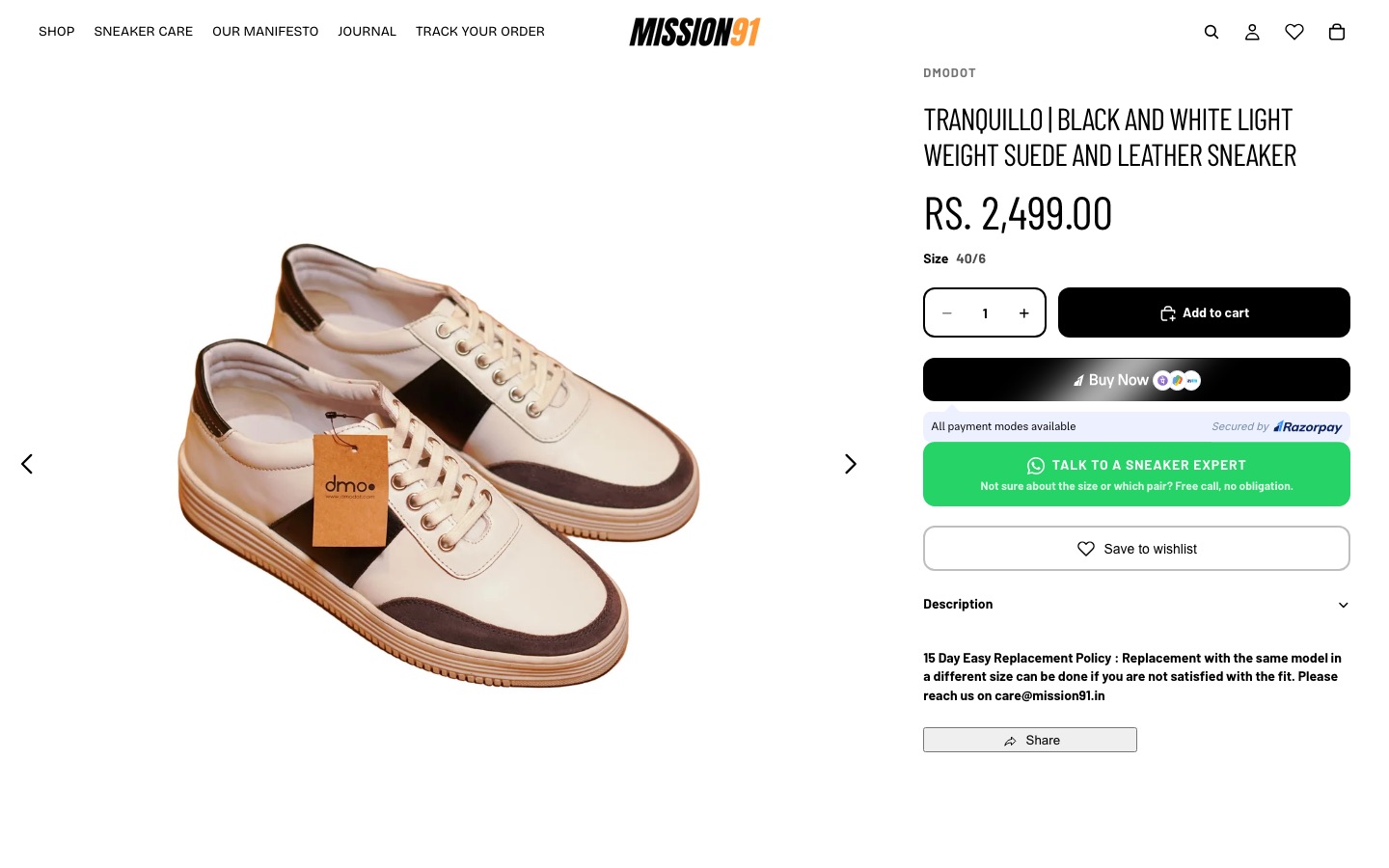
Mission 91 brings India's homegrown footwear brands into one store. Each brand has its own prices, its own photos, its own offers and its own stock. The shopper should see none of that.
The moment a shopper can tell there are several businesses behind the shelf, they stop buying from a brand and start buying from a middleman. Mixed photos, offers that show up in the wrong place and confusing deliveries all give it away. Everything hard about this store came out of that one constraint.
Behind the shelf, the work is just as real. Every order has to reach the right brand, and every brand has to be paid its share, with commission and taxes worked out correctly. If you have tried to run a marketplace on Shopify, you know the platform does not do that part well on its own.
How it went.
- It started as build and deliver.The first brief was a Shopify storefront, built and handed over. The store went live in August 2026. Then the questions got bigger: which integrations to use, how to set them up, and what to build versus buy. We became the advisor on those choices, and the project grew into an ongoing engagement.
- Photos gave it away first.Every label shoots differently: different backgrounds, angles, borders and crops. Fixing images by hand stops working past a few dozen products, and every new brand arrives with a fresh pile. We built a pipeline, using on-device and cloud AI models, that brings each product's main and hover photos to one store spec before they publish. A person reviews the output, and the pipeline never draws new detail or flips a shoe, so the shopper receives exactly the pair they saw.
- Each brand prices on its own.Brands run their own discounts, drops and buy-one-get-one offers, and each offer has to appear on that brand's products only. Shopify shows most discounts only once an item is in the cart, so we added an offer label that tells the shopper about the deal on the product card and page. All of it is built into the theme, with no paid apps. The mystery box drop goes from an Instagram story to a filled cart in one tap.
- One checkout, many dispatches.A shopper can buy from several brands in one checkout. Orders route to each brand and the shopper never finds out. Until go-live we were the single point of contact with the fulfilment provider, troubleshooting and negotiating on the client's behalf.
- Every vendor gets paid correctly.Shopify handles marketplace payouts poorly, so we built a payout portal. It reads orders straight from the store and works out each vendor's share: commission, payment gateway recovery, GST and TDS. Each payout comes with a statement and a receipt.
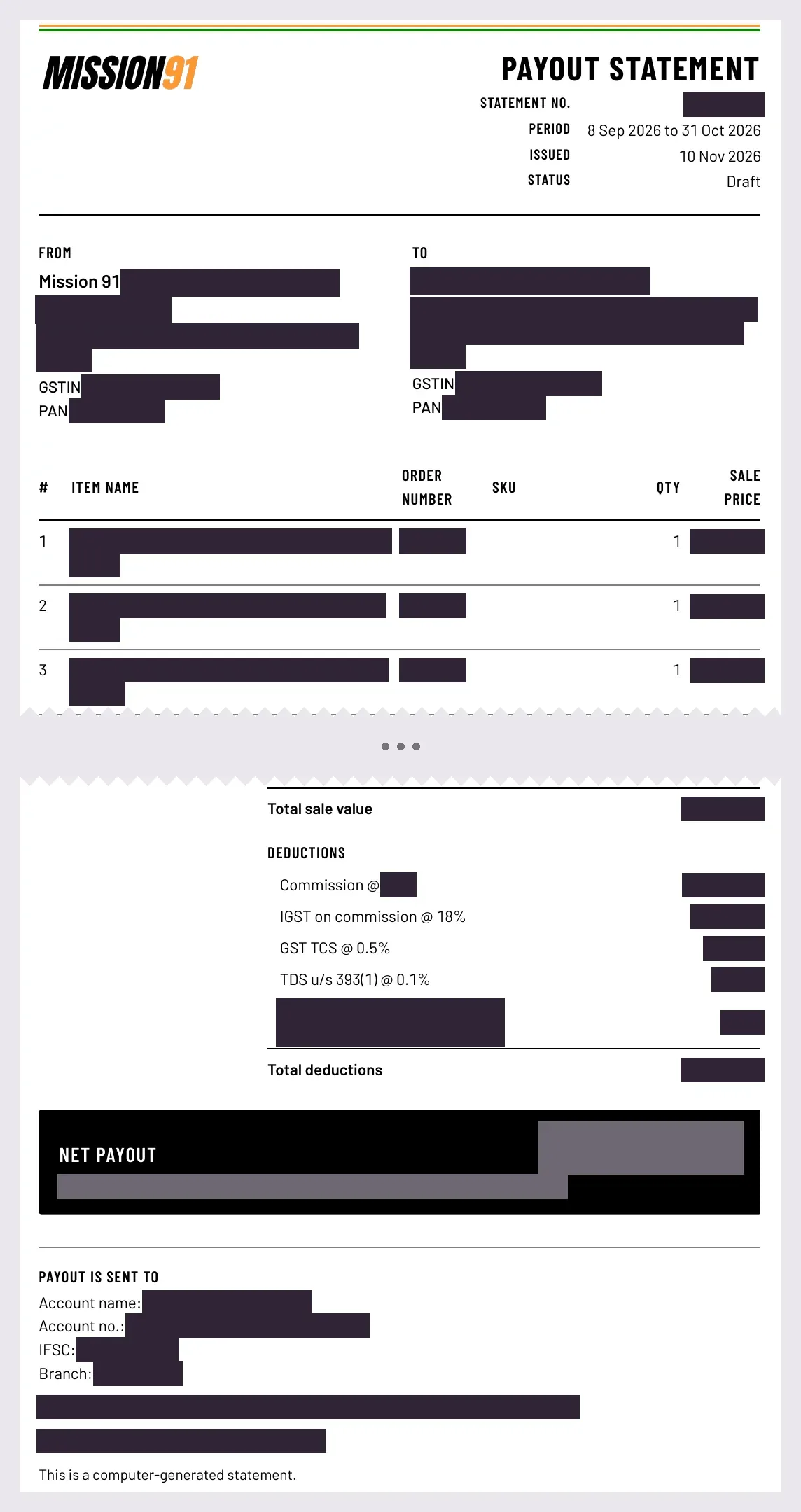
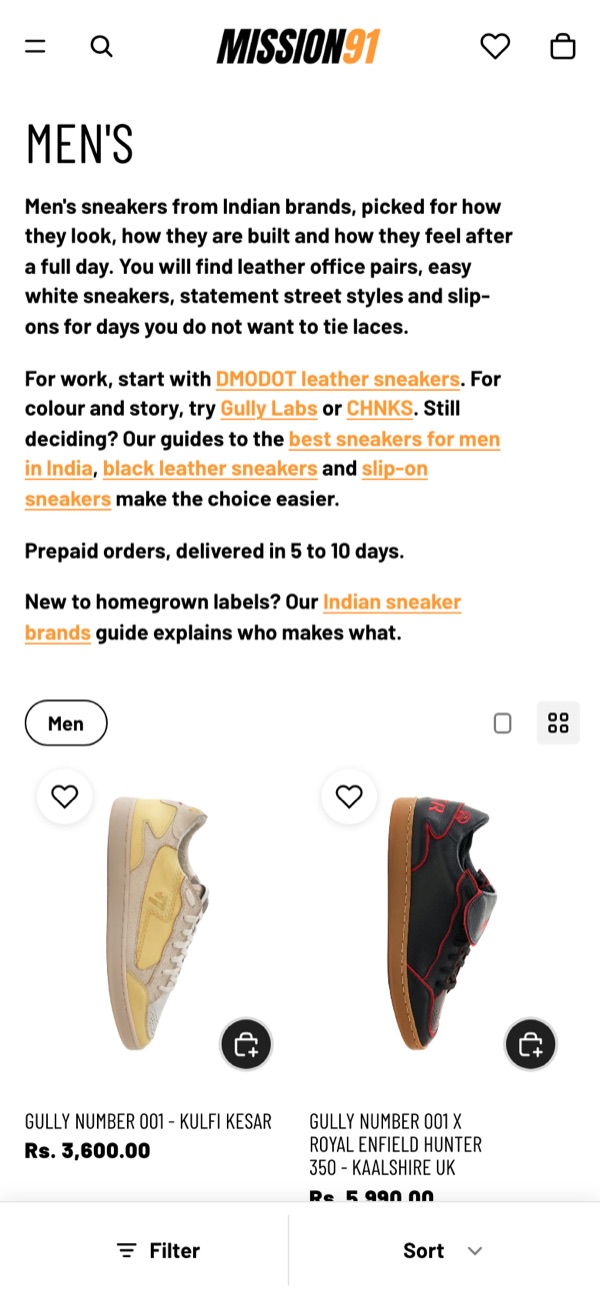
A vendor payout statement from the portal, details redacted. - Still on it.We run and extend all of it. Feedback from the store turns into changes: on phones, filter and sort now stay docked at the bottom of the screen while shoppers scroll, and a wishlist saves pairs without needing an account.
What we built.
- A mobile-first Shopify storefront
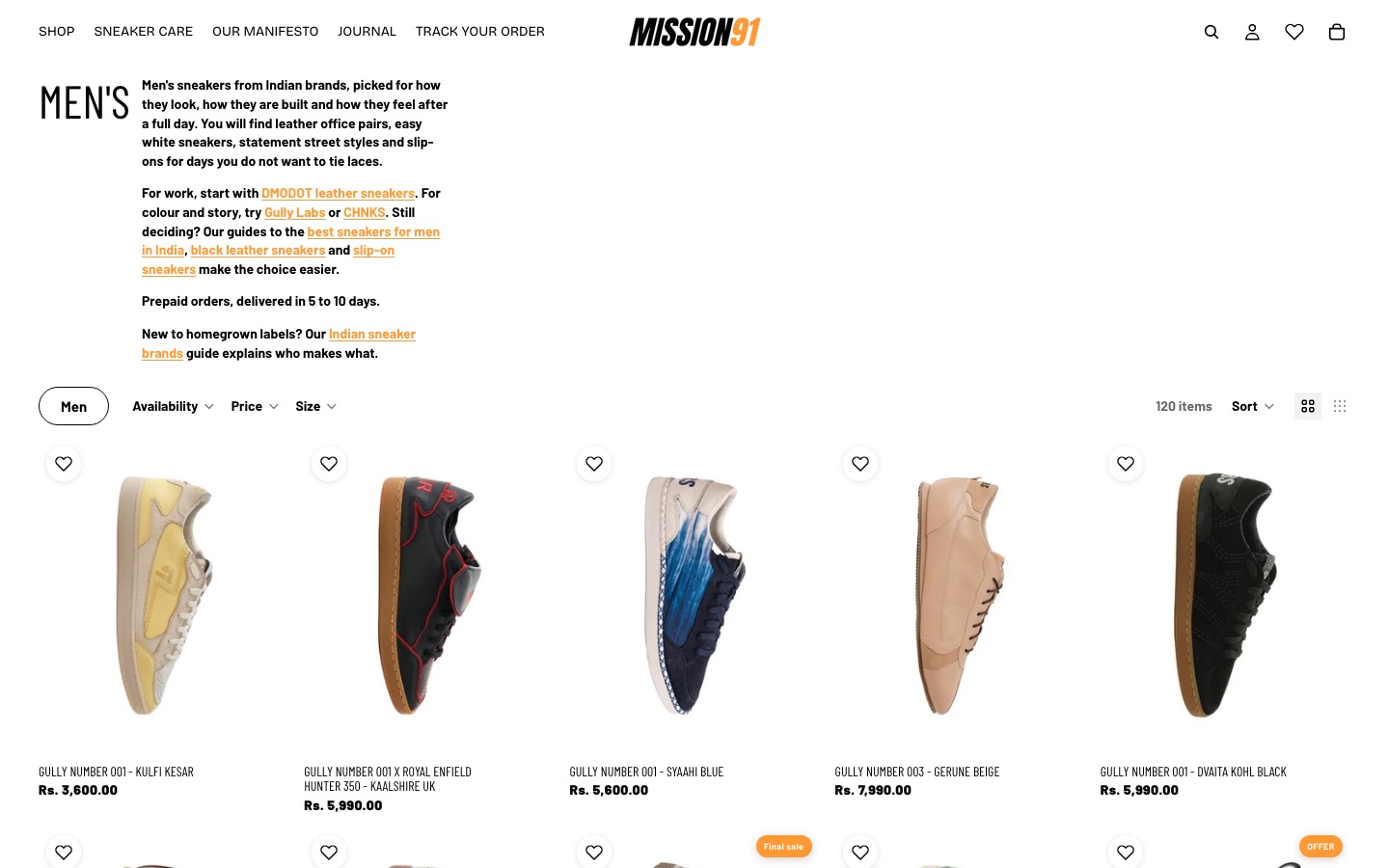
- Shop by men or women, with unisex pairs showing on both sides
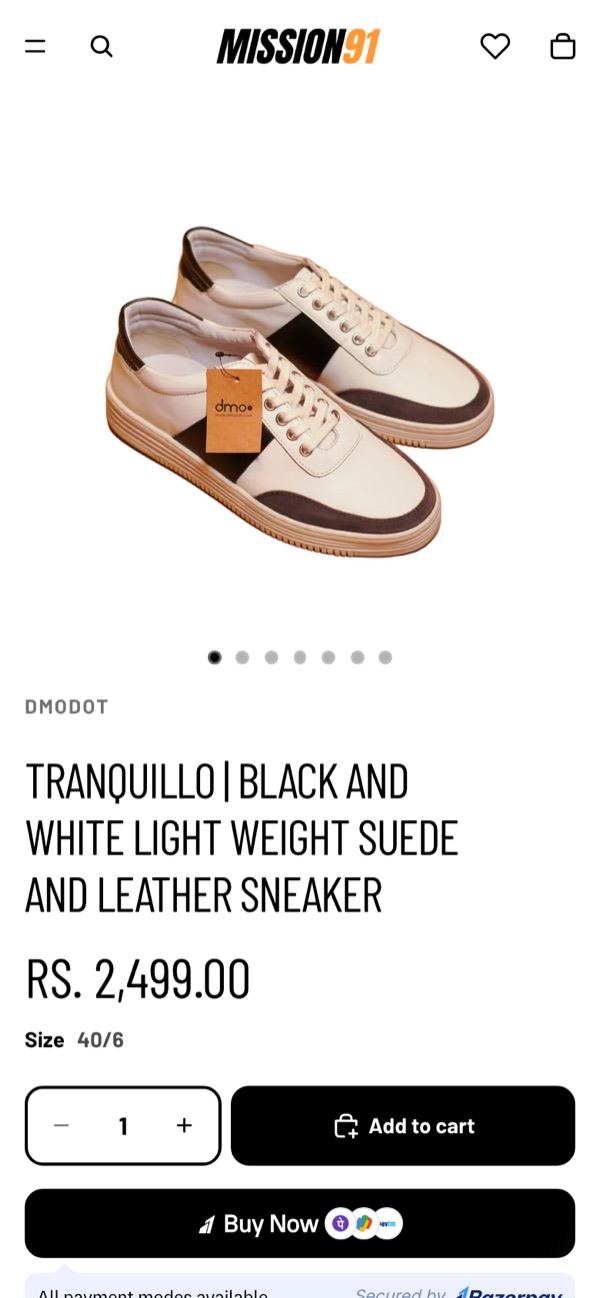
- A filter and sort bar that stays docked at the bottom of the screen on phones
- A wishlist that works without signing in
- Brand-scoped discounts, drops, buy-one-get-one and a mystery box, built into the theme without paid apps
- Offer labels on product cards and pages, so shoppers see a deal before the cart
- An image pipeline, using on-device and cloud AI models, with a person reviewing every result
- Order routing to each brand from a single checkout
- Single point of contact with the fulfilment provider until go-live
- A vendor payout portal: commission, gateway recovery, GST and TDS per vendor, with statements and receipts
- Advice on integrations, and ongoing support
What changed.
- The store went live in August 2026 and took 100+ orders through its launch period without a glitch.
- Shoppers see one store with one look, not a collection of different brand websites.
- Adding a brand no longer means a pile of manual photo editing.
- Brands run their own offers and drops without the store paying for extra apps.
- Vendor payouts are worked out by the portal from the store's own orders, not by hand.
- The client has one team to call for the store, the integrations and the payouts.
Questions.
Can a marketplace run on Shopify?
Yes. Mission 91 runs its storefront, checkout and orders on Shopify. The marketplace parts Shopify lacks, such as brand-scoped offers and vendor payouts, are built around it.
Do we need paid apps for offers and drops?
Not always. Mission 91's discounts, drops, buy-one-get-one and mystery box are built into the theme, so there is no monthly app fee for them.
What if every brand sends different photos?
That is the normal case. The image pipeline brings each product's main and hover photos to one spec, and a person checks the result before it goes live.
How do vendors get paid?
Through a payout portal that reads the store's orders and works out commission, gateway recovery, GST and TDS for each vendor, with a statement and receipt for every payout.